

How to start trading silver
Silver trading involves speculating on price movements to profit from fluctuations in the metal. As both a precious and industrial commodity, silver can offer distinct opportunities while managing risk exposure. With large volumes traded daily and significant price volatility, silver demonstrates the dynamic price movements that attract diverse market participants, including producers, consumers, institutions and retail traders.
Silver trading guide summary
This guide outlines how silver (XAGUSD) is traded and the key ways to gain exposure to its price movements, including CFDs, spread bets, ETFs, mining stocks, options and physical silver. It explains silver’s dual role as both a precious and industrial metal, highlighting how supply and demand, industrial usage, interest rates, inflation, the US dollar and market sentiment drive volatility. The guide also covers essential trading considerations such as leverage, liquidity and risk management, providing a clear foundation for trading silver with Pepperstone.
Whether buying in anticipation of price increases, selling ahead of a decline or hedging against future production and input costs, silver traders participate in a dynamic market driven by differing perspectives on the metal’s future. These views, combined with shifts in supply and demand, sentiment, and broader economic factors, contribute to ongoing price volatility that create both opportunities and risks.
Ways to gain exposure to silver
You can also gain exposure to silver via other instruments, each offering different characteristics and risk profiles:
ETFs (Exchange-traded funds)
Silver ETFs provide exchange-listed exposure to silver and can be bought and sold like shares.
• Silver mining ETFs track indices or baskets of silver mining companies. They can offer diversified exposure to the sector and may benefit from both rising silver prices and company growth. However, they do not provide direct price tracking of silver, as performance is also influenced by company-specific factors such as production costs, debt levels and operational performance.
• Physical silver ETFs aim to mirror the price of physical silver and may offer a more direct correlation to the underlying commodity. However, tracking error, management fees and market conditions can create discrepancies between the ETF’s performance and the spot price of silver.
Equity
Silver mining stocks offer indirect exposure to silver prices and the potential for equity-style returns, including capital growth and, in some cases, dividends.
However, share prices are influenced not only by silver prices but also by company fundamentals, management decisions, geopolitical risks and broader equity market conditions. This makes mining stocks a less direct and potentially more volatile way to gain exposure to silver.
Physical silver
Trading physical silver bullion provides direct ownership of the metal, which may appeal to long-term investors seeking tangible assets or portfolio diversification.
However, physical ownership involves practical considerations such as storage, insurance, security and liquidity. Transaction costs and dealer spreads can also be higher compared to financial instruments, making it less flexible for short-term trading.
Options
Options provide derivative exposure to silver with defined contract terms, including expiry dates and strike prices. They can be used for hedging or for expressing directional or volatility-based views with predefined risk (limited to the premium paid for buyers).
However, options are more complex instruments that require an understanding of pricing factors such as time decay and implied volatility. As such, they may not be suitable for all traders.
What drives the silver price?
Classic fundamentals
Supply vs demand dynamics: The balance between silver production and consumption fundamentally drives pricing. Demand exceeded supply for the fifth consecutive year in 2025, resulting in a structural market deficit. In 2026, the supply deficit is forecasted to be nearly 67 million ounces demonstrating persistent structural imbalances in the market according to the silver institute.
Industrial usage: Silver’s broad industrial applications across electronics, mobile communications, solar energy, and specialty chemicals create substantial demand beyond its role as a precious metal. This dual nature, as both an industrial and precious metal, distinguishes silver from gold and influences its price sensitivity to economic cycles.
Scarcity and supply constraints: As a finite resource, silver's availability impacts long-term pricing, though it's less scarce than gold and not held by central banks in their reserves.
Expected interest rates: Interest rates influence silver prices. As rates change, the opportunity cost of holding non-income-producing assets like silver shifts, affecting investment demand.
Hedge against inflation: Silver serves as a store of value and inflation hedge, similar to gold to some extent. However, it's not strongly correlated with other asset classes, meaning it can offer portfolio diversification benefits.
Speculative factors
Market sentiment: Trader psychology and market perception play crucial roles in short-term price movements. Silver is often overshadowed by gold, which attracts more investment and media attention, affecting sentiment-driven flows.
This dynamic tends to amplify volatility in silver, as positioning can shift more abruptly when investor focus rotates back toward silver. Periods of strong gold performance often create a response in silver, where traders reassess relative value and positioning. As a result, silver frequently experiences sharper catch-up moves once momentum builds, reflecting both speculative interest and the metal’s smaller market structure.
ETF/ETP inflows: Investment flows into silver ETFs and exchange-traded products provide important signals about institutional and retail investor positioning. Changes in these holdings can drive significant price movements.
US dollar fluctuations: As silver is priced in US dollars, currency movements create inverse pressure on silver prices. A stronger dollar typically weighs on silver prices, while dollar weakness supports them.
Macroeconomic conditions: Broader economic data, such as employment figures (non-farm payrolls), economic growth, and global uncertainty all influence silver demand and pricing.
A deeper dive into silver/XAGUSD CFDs
Leverage: CFD trading provides leveraged exposure to silver, allowing you to control larger positions with smaller capital outlays. However, this amplifies both potential profits and losses, making risk management crucial.
Long and short positions: Silver CFDs offer the flexibility to profit from both rising markets (long positions) and falling markets (short positions). A long position reflects expectations of price increases, while a short position anticipates declines.
Trading hours: Silver CFD markets operate nearly 24 hours during weekdays, providing access across global time zones and allowing traders to respond to international news and events.
Typical liquidity
With hundreds of thousands of ounces traded daily, silver CFDs offer substantial liquidity. This enables efficient order execution with tight spreads during active trading sessions.
Risk warning: Trading leveraged products such as silver CFDs carries a high level of risk and may not be suitable for all investors. This is because the potential for losses can exceed initial deposits.
Characteristics of silver price action/trading environment
Positive attributes
Volatility and trading opportunities: Silver's notable price volatility creates frequent trading opportunities and demonstrates the potential to capture significant moves within relatively short timeframes.
Accessibility: Silver offers a more accessible entry point into precious metals trading, allowing traders with smaller accounts to participate in precious metals markets.
Bridge between asset classes: Silver’s dual nature as both a precious and industrial metal provides unique characteristics, responding to both safe-haven demand and economic growth indicators.
Store of value: Like gold, silver functions as a wealth preservation tool, though with additional exposure to industrial demand cycles.
High-risk factors
Volatility cuts both ways: The same volatility that creates opportunities also presents risks. Broad trading ranges and frequent price changes require careful navigation and disciplined risk management.
No income generation: Unlike dividend-paying stocks or bonds, silver produces no income, which may reduce its appeal during certain market conditions.
Less prominent than gold: Silver typically receives less media attention and lower investment flows compared to gold, which can affect liquidity during stress periods and limit upside potential during precious metal rallies.
Declining investment demand: Recent trends show decreasing net investment in mining physical silver, which may further reduce or eliminate excess demand in the market.
Trading strategies
Trend identification and following
Identifying the prevailing trend is crucial for silver trading. Determine whether the trend represents a continuation of an existing pattern or a new direction, and assess its strength to gauge potential longevity.
Uptrends are characterised by higher highs and higher lows, generally indicating potential for further price increases.
Downtrends show lower highs and lower lows, suggesting potential for continued price declines.
Technical analysis approaches
Effective silver trading often combines fundamental and technical analysis:
- Candlestick formations: Patterns like shooting stars and hammers can signal potential reversals
- Moving average crossovers: Identify trend changes and momentum shifts
- RSI 14: Overbought/oversold conditions help identify potential turning points
Gold-silver ratio strategy
Traders monitor the gold-silver ratio (gold price divided by silver price) to identify relative value opportunities. This ratio has fluctuated significantly, from 31.6:1 in April 2011 to 114.7:1 in April 2020. Historical relationships between gold and silver prices can inform entry levels, stop losses, and profit targets, though past performance doesn't guarantee future results.
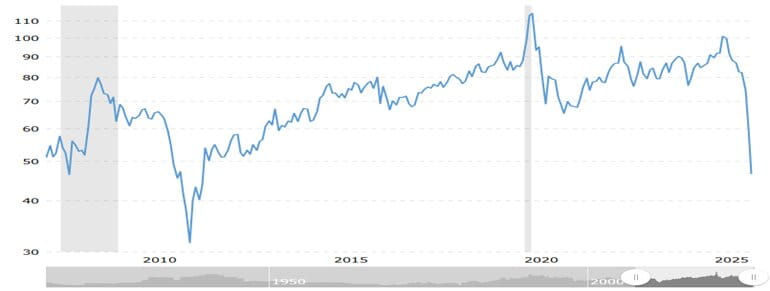
Source is macro trend ( Gold to Silver Ratio - 100 Year Historical Chart | MacroTrends)
In recent years, gold and silver have generally moved in the same direction, with silver demonstrating particularly strong gains recently as evidenced by the declining gold-silver ratio.
Day trading approach
To day trade silver, monitor patterns and indicators that might signal trend reversals while remaining aware of the current trend's strength. Quick position management with tight stops suits silver's intraday volatility.
Managing risk when trading silver
Develop a comprehensive trading strategy
A well-structured trading strategy should clearly identify trading opportunities, provide actionable insights, and suggest specific entry points, take-profit levels, and stop losses. Base your strategy on fundamental analysis of the silver market, technical analysis of price movements and indicators, or ideally a combination of both approaches.
Money management principles
Position sizing: Determine an appropriate trade size based on your account balance and risk tolerance. Never risk more than a small percentage of your trading capital on a single trade.
Limit open positions: Control your number of open trades at any given time to avoid overexposure and maintain portfolio balance.
Risk-reward ratio: Measure potential profit from each trade relative to the money at risk. Ideally, the reward should exceed the risk. Many traders target a minimum reward-to-risk ratio of 2:1 or 3:1.
Use stop losses: Always employ stop-loss orders to limit potential losses. Given silver's volatility, stops should allow for normal price fluctuations while protecting against significant adverse moves.
Practice with a demo accounts: Many silver traders prefer to try out new platforms, develop their strategy and improve their trading skills using a demo account. Demo accounts offer realistic market simulation and trading conditions without the risk of losing real money, allowing you to test strategies, get to know different platforms and build confidence.
Stay informed: Constantly monitor factors that influence silver prices such as interest rates, inflation data, industrial demand indicators, US dollar movements, and macroeconomic conditions. The interaction of these factors results in price fluctuations, and staying informed can help you anticipate potential moves.
Understand leverage risks: Remember that trading leveraged products like CFDs amplifies both gains and losses. Only use leverage you fully understand and can afford to lose.
Summary
Silver trading offers unique opportunities as a commodity that bridges precious and industrial metal markets. With large daily trading volumes and significant price volatility, silver can provide ample opportunities for traders seeking to profit from price movements.
Multiple trading methods are available such as CFDs offer efficient leveraged access, ETFs provide diversified exposure, while direct equity and physical holdings offer alternative approaches. Each method carries distinct risk-reward profiles suited to different trading styles and objectives.
Silver prices respond to a complex interplay of fundamental factors including supply-demand dynamics, industrial usage, interest rates and inflation expectations, alongside speculative influences like sentiment, ETF flows and dollar movements. Understanding these drivers helps traders make informed decisions.
The characteristics that make silver attractive are volatility, accessibility and its industrial nature. Successful silver trading requires a well-developed strategy combining fundamental and technical analysis, rigorous risk management including appropriate position sizing and stop losses and continuous market monitoring.
Whether you’re seeking short-term trading opportunities or longer-term exposure to precious metals, silver offers a more accessible entry point than gold while maintaining many similar characteristics as a store of value and inflation hedge. However, always remember that trading involves risk of loss and leveraged products carry particularly high risk that may not be suitable for all investors.
Begin with a demo account to develop your skills, create a comprehensive trading plan with clear rules and maintain disciplined risk management to navigate silver’s dynamic trading environment successfully.
The material provided here has not been prepared in accordance with legal requirements designed to promote the independence of investment research and as such is considered to be a marketing communication. Whilst it is not subject to any prohibition on dealing ahead of the dissemination of investment research we will not seek to take any advantage before providing it to our clients.
Pepperstone doesn’t represent that the material provided here is accurate, current or complete, and therefore shouldn’t be relied upon as such. The information, whether from a third party or not, isn’t to be considered as a recommendation; or an offer to buy or sell; or the solicitation of an offer to buy or sell any security, financial product or instrument; or to participate in any particular trading strategy. It does not take into account readers’ financial situation or investment objectives. We advise any readers of this content to seek their own advice. Without the approval of Pepperstone, reproduction or redistribution of this information isn’t permitted.